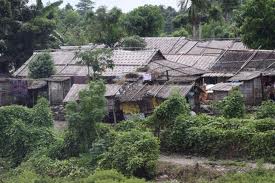


Lessons from the World’s Most Successful Refugee Camp Published by jnarvey at 8:56 am under human rights,Israel-Palestine,middle east We learned this week that Canada is the first Western nation to pull the plug on UNRWA, the United Nations-run relief operation for Palestinian refugees of the West Bank and Gaza. The government has been quick to clarify that relief is still on the way. It will now be dedicated to specific projects like food aid; hopefully with enough oversight to prevent mismanagement and inadvertent support to a terrorist organization. The government’s move is also a not-so-subtle indictment of a broken refugee support program that has arguably only perpetuated Palestinian misery and held up the Middle East peace process. As we look forward, the international community might take a lesson from the other side of the border from the UNRWA camps to Israel, which may fairly take the title of most successful refugee camp in modern history. The Forgotten Refugees When someone uses the phrase, “refugees” in the context of the Middle East, we typically think of the Palestinian refugees who lost their homes during the Arab-Israeli wars of 1948 and 1967. The common narrative also holds that when we talk of Jewish refugees, we’re talking about white, European Jews who escaped the Holocaust to seek some measure of safety not only in the Holy Land, but also in the USA, Canada and elsewhere. But these narratives overlook a movement of nearly one million Jewish refugees from Arab countries during those same years, roughly equivalent in number to the original Palestinian refugees. They were largely persecuted, second-class citizens set upon by their neighbors and governments. “We call these people the forgotten refugees,” says Regina Waldman, founder of JIMENA, an organization seeking recognition for these people in the context of an overall settlement in the Middle East. Waldman was herself a refugee from Libya in 1967, surviving anti-Jewish riots and other violence that claimed the lives of her friends and neighbors before escaping the country. Waldman wants to see a regional peace deal that puts Palestinians’ claims “on an equal footing with the Middle Eastern and North African Jews”. “When the Six-Day-War broke out between Israel and its Arab neighbors, I was 19 year old,” Waldman remembers. “My mother called me at work to tell me that thousands of people had taken to the streets rioting and burning Jewish properties… Killing people, rampaging and burning Jewish properties went on for days. I lived in hiding for a month before returning home.” A Jewish community that had lived in that country for over 2,000 years, albeit under second-class Dhimmi status, was wiped out as Jews fled lynchings, mob violence and torture and imprisonment by the government. This process was repeated across the region in Algeria, Egypt, Iraq, Lebanon and Iran. One Group Finds Haven, Another is Rejected Most of the refugees were resettled in Israel. For many, their first stop looked much like refugee camps elsewhere: a sprawling tent city in the middle of a wasteland. But these traumatized survivors would have a vastly different outcome than their counterparts elsewhere, particularly the Palestinians. The refugee tent cities were way-stations, not permanent residences. “All of these people were absorbed into Israel and became part of the society, and without even taking a nickel from the United Nations,” Waldman noted. Israelis ignored the obvious difficulties for a tiny relatively poor state to take in so many refugees at once, understanding that the priority was to give people with a common heritage a home and a chance for better life. In contrast, where Palestinians attempted to find homes among their Arab neighbors, they were nearly always turned back, despite the ancient links of culture, ethnicity, religion, trade and even close family ties that formerly bound them to other countries in the region. Notably, many Palestinian refugees have migrated quite successfully to countries well outside the Arab world such as Canada. But for the Palestinians who remain in the camps, they have inherited a United Nations welfare state. They’ve received billions of dollars since 1948. Meanwhile, conditions in the Palestinian territories remain atrocious. Canada’s decision on changing its funding vehicle for Palestinians works as a wake-up call to the international community that we don’t want to keep reinforcing failure. We want to see better outcomes. Hopefully, when a solution does come, it will recognize the claims of all the refugees, including the forgotten ones. Potential Graphic Styles Milk: http://www.vectorvault.com/2009/03/03/interview-with-vector-artist-milk/
Comic style http://www.photoshoproadmap.com/Photoshop-blog/give-your-photos-a-retro-comic-book-effect/
My favorite list http://speckyboy.com/2012/01/04/top-50-graphic-design-photoshop-tutorials-from-2011/
Other styles with tutorials attached http://creativefan.com/20-illustrator-tutorials-that-will-make-you-a-better-designer/
http://designrfix.com/resources/60-adobe-photoshop-illustrator-tutorials
Helpful tips http://www.smashingmagazine.com/2008/01/10/adobe-photoshop-tutorials-best-of/ Jane Jacobs 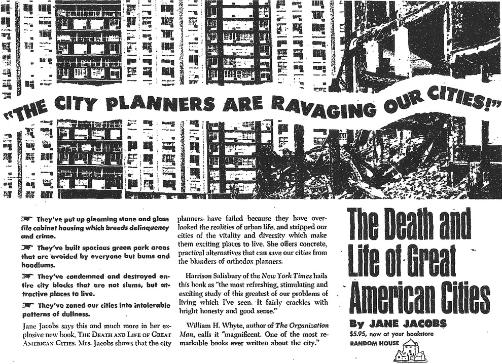
 The Parametric Planning Revolution
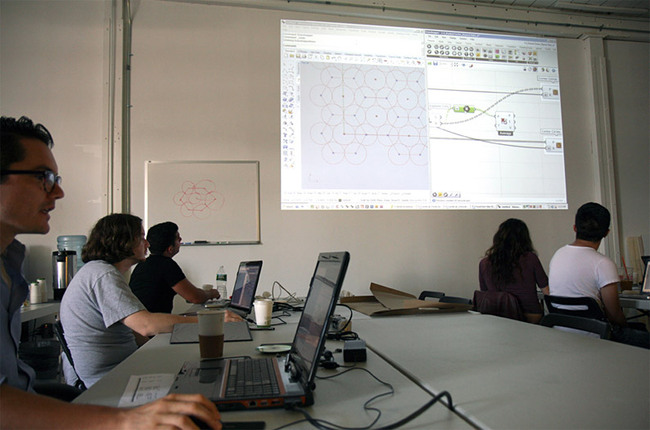 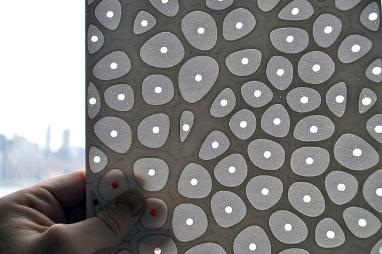 URBAN SOS: Campus CatalystThe Harvard Graduate School of Design interns and students in the office this summer submitted a proposal for AECOM's Urban SOS competition a few weeks ago. The proposal, a distributed vocational school embedded in an existing settlement, aims to use precise replicable and scalable strategies to improve education, increase jobs and rebuild Port-au-Prince. |
TYIN Architects 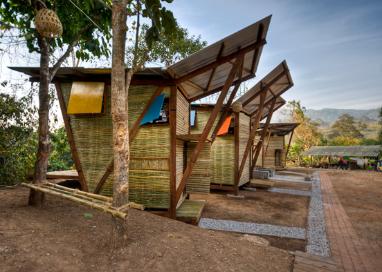 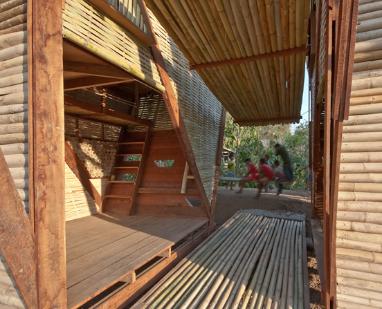 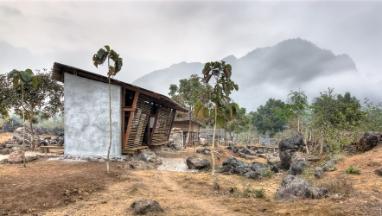 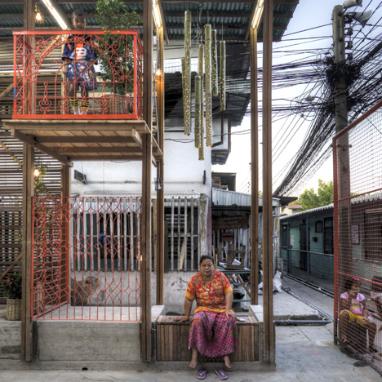 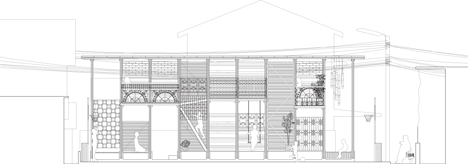 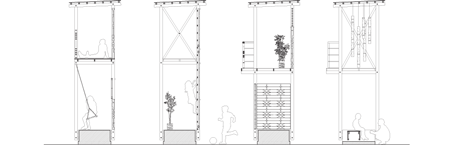 MASS member, Libby, involved with Rethink ReliefGreetings from the Delft Institute of Technology in the Netherlands! I am here for a weeklong design workshop called Rethink Relief, the purpose of which is to build bridges between relief and development with appropriate design and technology. The workshop is held in part by D-Lab at MIT (d-lab.mit.edu), my alma mater. I’m going to share a few details of my time here for you! When a natural disaster or political upheaval occurs, the conditions into which people are forced can last far longer than anyone anticipates. A relief organization might pass out tents, food, clean water, medicine, and other resources. But tents do not last more than six months, and one cannot rely on processed food flown in to a campsite forever. What if there is no land to grow one’s own food, or fuel with which to cook unprocessed food? What if the water source runs out? What happens when a tent disintegrates but there is nowhere else to go, and no new tents? What if an oppressive government forces relief organizations to leave, taking all their medicine and supplies with them?  Darfur Refugee Camp in Chad Darfur Refugee Camp in ChadSometimes after a catastrophe, people become permanently stuck in the relief camps, which turn into slums that grow indefinitely. International development organizations have no control over the politics that may confine these people to any given area. But they CAN figure out ways to improve quality of life there for the long term, after relief organizations have moved on to the next disaster. Or what if the two entities could join forces to do a better job of implementing both relief AND development in one go? Elizabeth Ferris of the Brookings Institute wrote, “In spite of hundreds of articles, countless speeches, and numerous conferences, the gap between relief and development is still far from being overcome.” We are gathered here at Rethink Relief this week to generate ideas and form lasting connections that will work to bridge this divide. There are 25 people from around the world at the workshop. They come from a variety of backgrounds: Doctors Without Borders, universities, NGOs, engineering companies, and more. Some have experience in relief work; others, like myself, have more of a background in international development. I am one of three structural engineers, and there are also industrial designers, doctors, relief workers, entrepreneurs, economists, social workers, and others whose work cannot possibly be confined to just one of these disciplines. As you can imagine, Rethink Relief is a fantastic opportunity to meet others who share MASS’s philosophy of Well-Built Environments! During the first two days of the workshop, we have gotten to know each other and formed teams to work on individual issues affecting relocated populations. My team has decided to focus on the issue of potable water storage and distribution. Of course, clean water is crucial to maintaining health in a relief camp, and healthy people have time and energy to improve other aspects of their lives. You could argue that clean water is the first step to overcoming all other hardships. Rainwater catchment has been studied by many different people over the years. However, catchment systems often involve large clay or plastic tanks that are not easily moved, and can also be expensive (see photo below). In a temporary housing situation, people need cheaper and more portable solutions for storing and sharing water. Ideally, this storage design would be versatile enough for people to expand, take with them when they leave, or transfer to a more permanent home on the same site. Since one of our team members is from Uganda and is sharing his own experience with obtaining clean water, we are focusing our design on a system that might work well in a climate like Uganda’s.  Rain Water Harvesting Tank Rain Water Harvesting TankStay tuned for an update on our work at the end of the week! For now, I leave you with these questions to think about: What is the proper role of engineers and designers in a relief situation? How can we design solutions to improve people’s quality of life when they are in a temporary housing situation that we fear might become permanent? And how will access to clean water help a relief camp’s inhabitants create a Well-Built Environment for themselves? Libby Hsu- received a bachelor’s degree in civil engineering from Rensselaer Polytechnic Institute and two master’s degrees in high performance structures and building technology from the Massachusetts Institute of Technology. She now is bringing her engineering experience to MASS. Follow-up with Libby, at Rethink ReliefRethink Relief, a design workshop at the Faculty of Industrial Design at TU-Delft, has come to an end and it was a productive week for all involved. We mixed idea generation and design with insightful lectures about the design process and relief-related research going on at TU-Delft. On Friday we wrapped up with presentations of each team’s work, which were attended by faculty and students from all over the university. My team presented our ideas for a more mobile, transferable water system. The driving force behind our design is the need to adapt rainwater catchment systems to any type of shelter. We want to pair a tarp with a gutter connected to many individual pipes that can be assembled over either a tent or a more permanent roofing system. Then the user can connect the pipes to any number of small water containers, such as plastic “pillow” bags, jerry cans, or terra cotta pots, which are easy to carry around. Reusable plastic bags would be an ideal way to disinfect the water with UV light. The containers can finally be stockpiled in larger rigid containers, such as the uniformly sized plywood boxes that Doctors Without Borders uses to transport supplies to relief camps. In this way, water could be available during dry periods in modestly-sized containers that can be used or shared easily. This is still a concept that needs extensive development. My teammates David, Christoffer, Joana and I hope to keep collaborating in the future to develop the idea and get other people on board to help us make it a reality. Rethink Relief showed us that there is an extensive network of innovators interested in these solutions, and we need to tap into this network if we want to make real changes to the living conditions of people in relief camps and beyond! The most important lecture of the week, for me, was that which asked the question “What are we designing for?” Lecturer Amy Smith of D-Lab started the presentation by saying, “THERE ARE NO SOLUTIONS, THERE ARE ONLY TRADE-OFFS.” The trade-offs can occur among the following needs, to name just a few: Affordability, Usability, Manufacturability, and Sustainability. And finally, my favorite trade-off: Failure. It seems counterintuitive at first to design for failure, but as a structural engineer you could say this is my primary concern. The challenge is to think about how the product or structure might fail, then make sure it fails in the safest way possible and the way that is easiest to fix again – because no matter what you might hope, it WILL fail. In an earthquake, for example, our goal is to make sure the building does not collapse and kill people. This does not mean the building won’t be damaged – there are no earthquake-proof buildings, only earthquake-resistant buildings. It is the engineer’s job to ensure that the building sustains the least catastrophic damage, rather than no damage at all. A key motivator in designing our rainwater-collection system is to make sure it is easy to fix when it fails. There should be as few components as possible, and each component should be made of cheap, easily available materials that can be replaced quickly. For example, the pipes transferring rainwater to individual containers could be made of a narrow plastic tape that is used in countries like India for irrigation. The tape usually lasts for only a couple of years before it starts to break down, but its low-cost design makes it possible for people to afford it. It doesn’t require a large investment, yet it is still an effective material with which to collect rainwater! Another lesson learned this week: sometimes the best solutions are so simple that we overlook them. Our culture’s drive to advance technology is often counter-intuitive to the needs of a relief or development situation. People need simple ways to obtain drinking water, shelter, food, and education, and these methods must be sustainable and applicable to any situation in which those people might find themselves. Refugees in relief camps can be stuck in those “temporary” camps for 10 years, 20 years, or their whole lives. By that time, their home is not a camp anymore: it is a slum. Engineers, architects, doctors, social workers, and other innovators have a duty to help these people now – not later, when they might be able to leave the camp. We simply don’t know when “later” will be, if it ever arrives, and we have little control over the politics driving that opportunity. So let’s work to simply and effectively improve human living environments as they are right now. Libby Hsu- received a bachelor’s degree in civil engineering from Rensselaer Polytechnic Institute and two master’s degrees in high performance structures and building technology from the Massachusetts Institute of Technology. She now is bringing her engineering experience to MASS.   
|
This free website was made using Yola.
No HTML skills required. Build your website in minutes.
Go to www.yola.com and sign up today!
Make a free website with Yola

